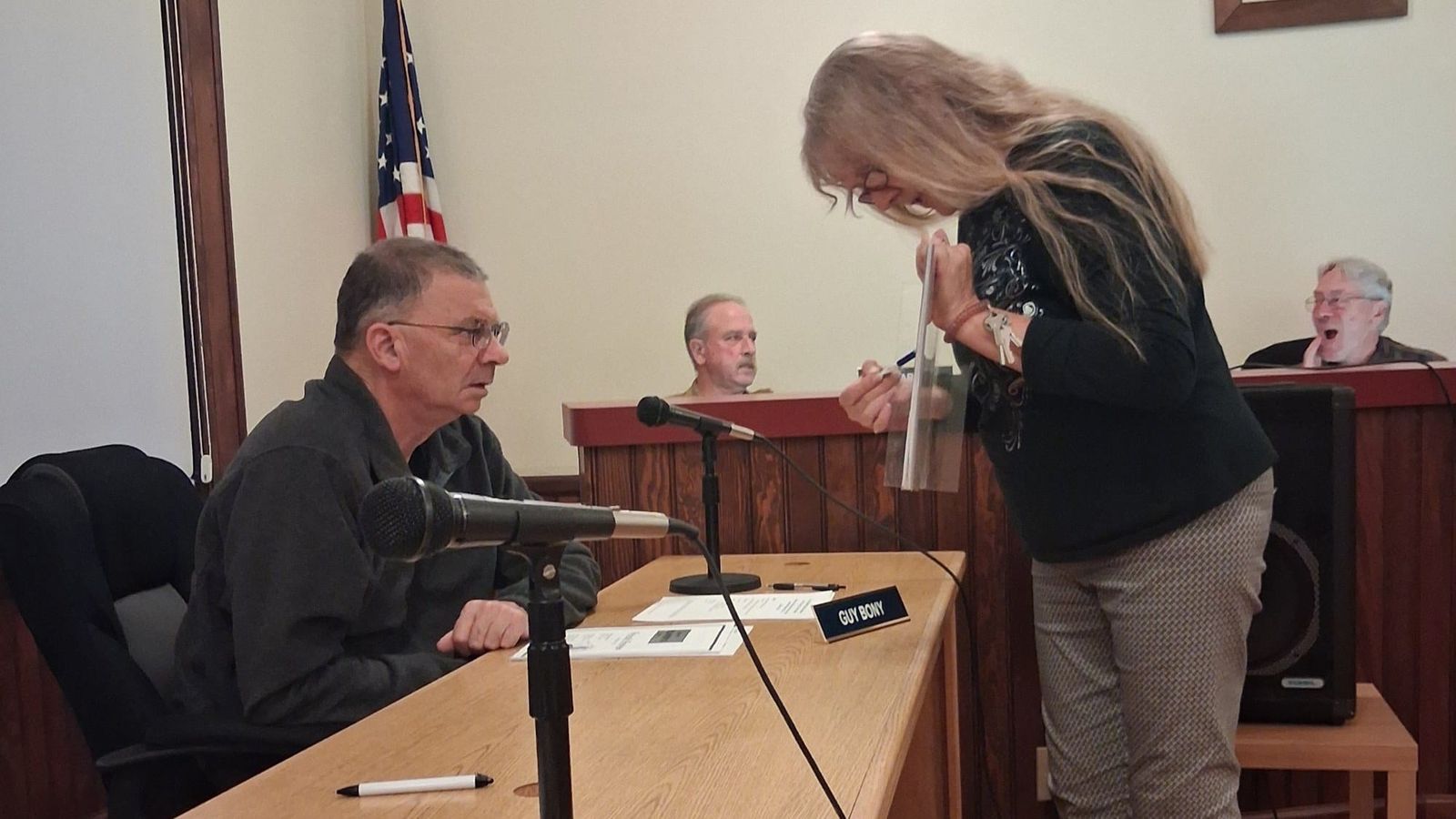
Oakland Planning Commission, comprehensive plan workshop, October 19, 2026
Present: Chairman Wayne Estes and Commissioners Guy Bony, Ed Carson and Nathan Heinricy.
OAKLAND — The Oakland Planning Commission won't rewrite the city's 40-year-old comprehensive plan in one sweep. It will update the plan a piece at a time, starting with a string of homes along Highway 99 that commissioners consider the least controversial change on the table.
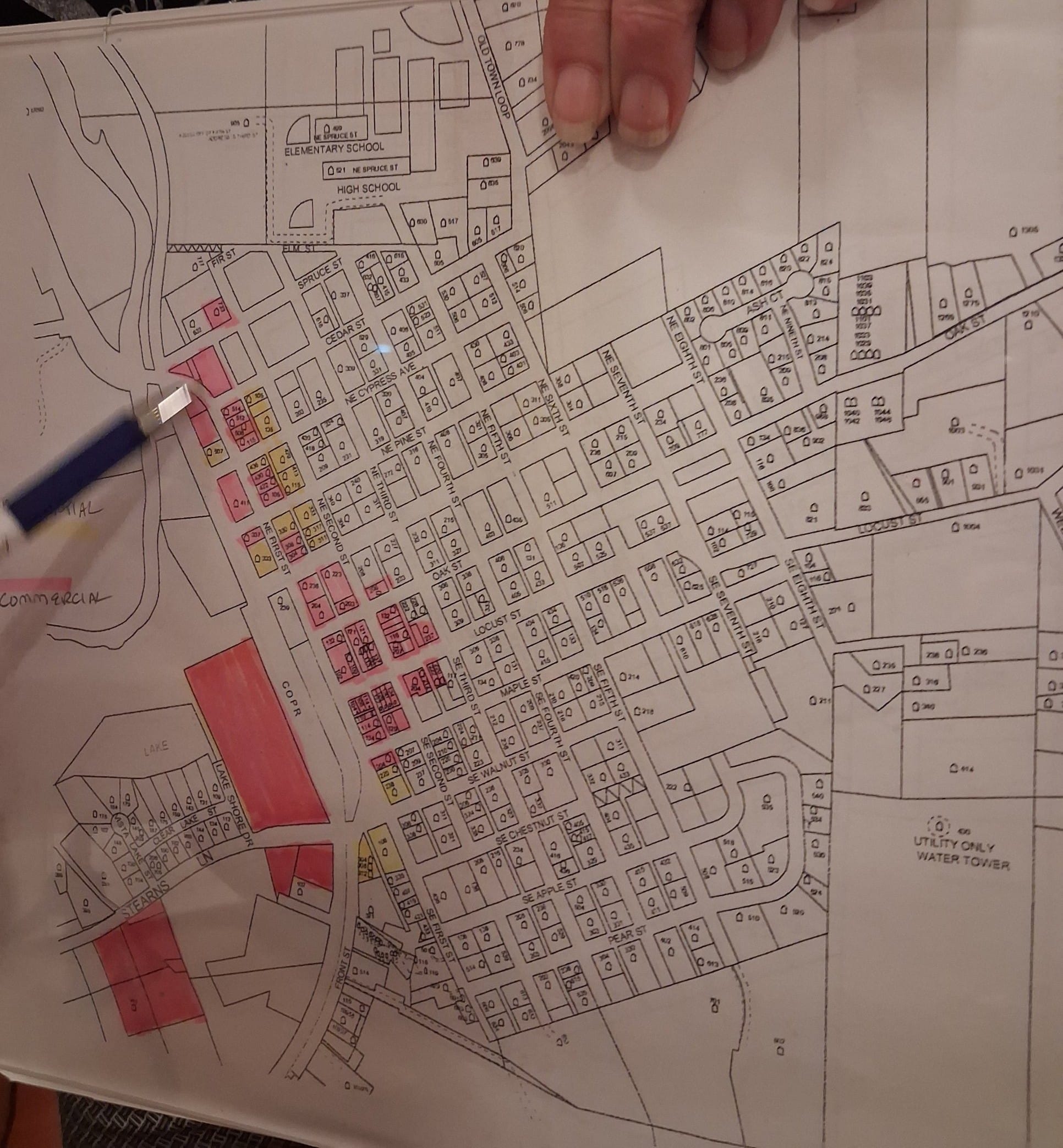
At a workshop before its regular meeting Oct. 19, the commission settled on two first steps. One is a plan amendment returning commercially zoned properties on both sides of Highway 99 north of Ash Creek to residential use. The other is applying for a state grant to hire experts for an economic opportunities analysis, a study of how much commercial and industrial land the city actually needs.
State: amendments are fine
Planning Clerk Terri Long said she has been corresponding with Josh LeBombard of the Oregon Department of Land Conservation and Development, who asked for and reviewed Oakland's 1986 plan. According to Long, LeBombard told her small cities can update their plans through individual amendments rather than a full rewrite, and that returning the Highway 99 properties to residential "makes a lot of sense."
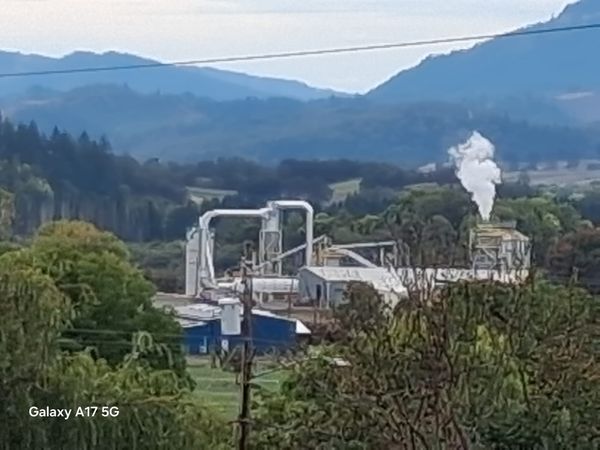
At an earlier workshop, commissioners had floated changing some industrial land west of the railroad tracks and south of Stearns Lane to residential. That idea is what led Long to ask the state about converting industrial land.
Converting industrial land is another matter. In an Oct. 19 email that Long handed out at the workshop, LeBombard pointed to a state rule, OAR 660-009-0010, that applies when a city changes more than two acres from an industrial or other employment designation to another use. The city would have to justify such a change with an economic opportunities analysis. The rule, he wrote, "is really intended to prevent land with higher paying job potential from being converted without proper forethought."
Chairman Wayne Estes said the state's response "gives us kind of the green light" for an economic opportunities analysis, to make "a good faith judgment on how much commercial space and industrial space we need based on current needs and trends."
Highway 99 first
Working from a zoning map, commissioners confirmed that the gas station and the veterinary clinic would stay commercial. Larger commercial tracts near Stearns Lane are not part of the proposal.
Commissioner Guy Bony said the Highway 99 change is "pretty uncontroversial," and that working through one specific amendment first would teach the commission the process "so we don't look like total idiots in front of the whole world" when it takes on bigger questions. Commissioner Ed Carson urged doing that one "as quickly as possible."
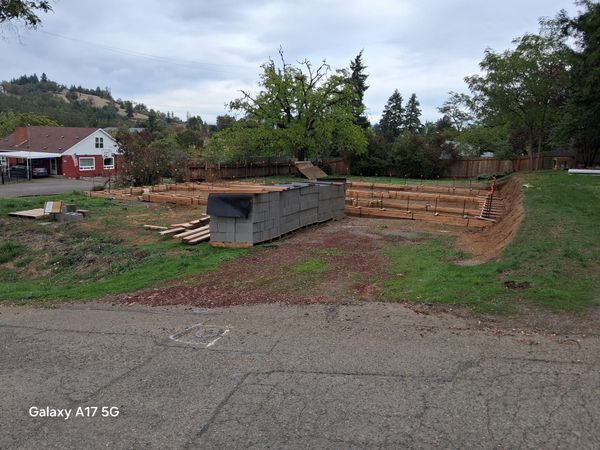
Long reported that someone interested in the vacant Highway 99 lot where a mobile home burned had asked city staff about rezoning it sooner, possibly together with neighboring owners. Estes said a grouped application could probably be filed, but each lot would likely have to meet the review criteria on its own. Long said she would ask the city attorney.
Long will bring a list and map of the affected properties to the commission's Nov. 16 meeting.
The grant, the cost and the clock
Commissioners agreed the economic analysis should come before any broader plan decisions. "Without that expertise ... we can't really put together the plan," Estes said. He said the city's 40-year-old plan should put Oakland high on the list for a grant.
In his email, LeBombard suggested the city and the department talk before the state's next budget period begins in July 2027 about Oakland applying for a technical assistance grant to pay for the analysis. An updated analysis, he wrote, would help the city plan its economic development future and "provide the city with a current snapshot of the inventory of employment land."
The cost of the study is unknown. Long noted that the rewrite of the city's development code about 10 years ago cost $50,000. Carson pointed out the city may not get the grant, and said the commission should meet with community members first in any case.
Long also gave commissioners a copy of the state's 2012 guide to periodic review, the formal, state-scheduled process for updating a comprehensive plan. Under the guide, that process is required only of cities with more than 2,500 residents inside the Portland-area Metro region or another metropolitan planning area, or more than 10,000 elsewhere. Oakland, far smaller, can make its changes as individual plan amendments instead. The guide notes that an amendment generally requires at least one hearing before the planning commission and one before the city council.
Bony pointed out that the guide's first step is reviewing the city's citizen involvement program, to make sure residents have a way to take part in every phase.
For the larger work, commissioners suggested bringing in state economic development officials, the City Council, the Parks Commission, the enterprise zone and, at Carson's suggestion, the school district. Long said she would send stakeholders the workshop agenda with more detail and an invitation to give input.
Enterprise zone questions
The workshop left open how the regional enterprise zone, which Oakland shares with Sutherlin and other jurisdictions, affects the city's land-use planning. Carson said the zone, more than 35 years old, was created to attract business after timber jobs disappeared, and that Oakland has rarely been promoted in it. Estes said he doesn't see the zone as having any authority over the city's plan. Long said she would obtain the zone's map and agreements.
Bedroom community or self-sustaining neighborhood?
Bony said Oakland's future is mainly as a bedroom community, with Sutherlin serving as the area's industrial and shopping hub. Estes said more housing in Oakland would expand the opportunity for neighborhood retail and services, though not industry. The question went unresolved as the commission moves toward an economic opportunities analysis.
Harger suggested notifying affected landowners early, including the owner of the industrial land near the railroad, who he said would be concerned about any change. Rezoning part of that land next to the tracks for housing could affect how the owner’s remaining industrial property can be used. Notice at the preliminary stage, he said, would let the city work “with him, not to him.” Long agreed.
The commission's regular meeting that followed is covered in a separate story.
Disclosure: Planning Commissioners Ed Carson and Guy Bony serve on the Beacon's editorial board. Both took part in the discussion reported here. Beacon publisher Wayne Harger spoke during the workshop, and his remarks are reported above.
Sources
- Audio recording of the Oct. 19, 2026, Planning Commission comprehensive plan workshop (above)
- Planning Commission agenda, Oct. 19, 2026
- Email from Josh LeBombard, Oregon Department of Land Conservation and Development, to Planning Clerk Terri Long, Oct. 19, 2026, distributed at the workshop
- "The Complete Planner's Guide to Periodic Review," second edition (2012), Oregon Department of Land Conservation and Development, distributed at the workshop
Compiled from the meeting's audio recording using AI transcription and reviewed by the editor.